Platform Maturity: Why Your Portal Choice Defines Your DevOps Success
A deep dive into the trade-offs between self-hosted portal frameworks and SaaS data platforms for Internal Developer Portals.
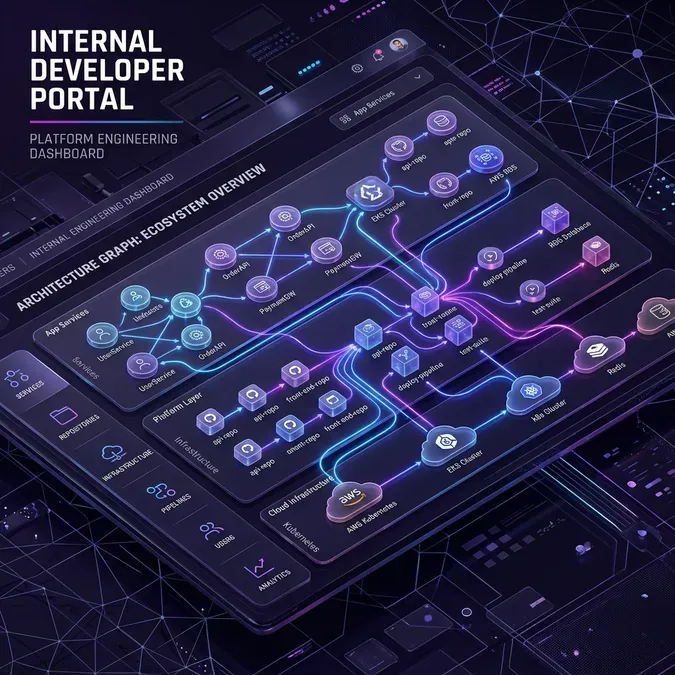
In 2026, Platform Engineering has officially overtaken DevOps as the dominant operational model for scaling engineering teams. At the heart of this shift is the Internal Developer Portal (IDP)—a single pane of glass where developers can discover services, check documentation, and trigger self-service actions.
However, the "IDP Market" is split into two radically different philosophies: Backstage (The Framework) and Port (The SaaS Product).
1. Backstage: The Framework for Customization
Originally created by Spotify, Backstage is more than just a tool; it's a React framework for building a portal.
The Highlights:
- Total Ownership: You own the code, the UI, and the plugin architecture.
- Massive Ecosystem: With over 100 community plugins, you can integrate almost anything from PagerDuty to Datadog.
- Extensibility: If a plugin doesn't exist, you can build it.
The Trade-off:
The "Backstage Tax" is real. To run Backstage effectively, you need a dedicated team of engineers to handle Node.js version upgrades, dependency conflicts, and React maintenance.
2. Port: The SaaS Data Platform
Port takes a "Data-First" approach. Instead of building a custom app, you define a Blueprint (your data model) and Port renders the UI automatically.
The Highlights:
- Speed to Value: You can have a working software catalog in 15 minutes.
- No Maintenance: Port is SaaS. There are no versions to upgrade or servers to patch.
- Logic over UI: You focus on defining your infrastructure relationships, not writing frontend code.
Technical Comparison
| Feature | Backstage | Port |
|---|---|---|
| Logic Layer | YAML + TypeScript | JSON Blueprints |
| UI Customization | Unlimited (React) | Structured Widgets |
| Data Ingestion | YAML in Repos | Event Hooks / Agents |
| Catalog Depth | Plugin-specific | Universal (Any entity) |
| Self-Service | Scaffolder | Action API |
Lessons from the Field
Pro Tip: Don't start with the UI.The biggest mistake teams make is trying to make a "pretty dashboard" first. The value of an IDP is in theData Model. Whether you pick Backstage or Port, spend 80% of your time defining your "Blueprints"—how a Service relates to a GitLab Repo, which relates to an AWS RDS instance, which relates to a PagerDuty Schedule.
Frequently Asked Questions
Is Backstage really free?
The software is Open Source and free. However, the "Total Cost of Ownership" (TCO) is significant. While there is no license fee, you will likely encounter high operational costs in terms of engineering time required to maintain, upgrade, and customize the portal. Port has a upfront license fee but significantly lower long-term maintenance overhead.
Can I migrate from Backstage to Port later?
Yes. Since both tools rely on a "Catalog" concept, the underlying data (your service metadata) can be exported and imported. However, any custom React plugins you wrote for Backstage will not work in Port.
Does Port work with on-premise infrastructure?
Yes. Port uses "Exporters" (lightweight agents) that you run inside your VPC. These agents push data out to Port's SaaS plane, so you don't need to open your firewall to external traffic.
Further Reading
- Platform Engineering Roadmap 2026
- Implementing IDP Golden Paths with ArgoCD
- The Rise of the Platform Engineer
Need help architecting your internal portal? Our engineers can assist.